New
Free Shipping on All Orders Over $100!

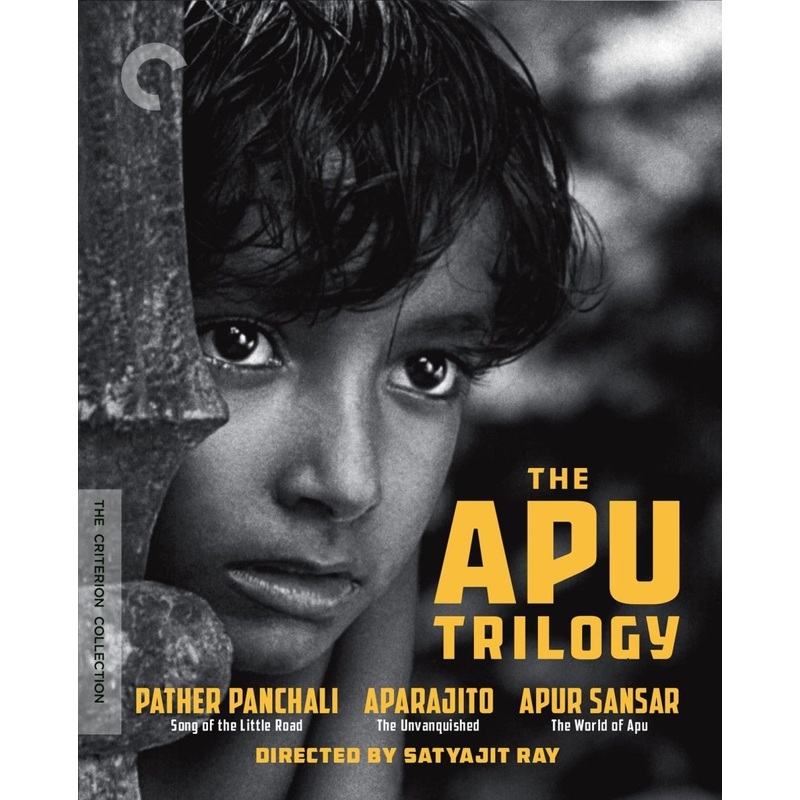
A breathtaking milestone that broughtIndia into the golden age of international art-house film, Satyajit RaysThe Apu Trilogyfollows one indelible character, a free-spirited child in rural Bengal whomatures into an adolescent urban student and, finally, a sensitive man of the world. Rays delicate masterworksPather Panchali(Song of the Little Road),Aparajito(The Unvanquished), andApur Sansar(The World of Apu)based on two books by Bibhutibhusan Banerjee, were shot over the course of five years, and each stands on its own as a tender, visually radiant journey. These filmswhichhave risen from the ashes in meticulously reconstructed restorations, after the original negatives were burned in a fireare among the most achingly beautiful, richly humane movies ever made.
SHARE
Pather Panchali
1955
With the release in 1955 of Satyajit Rays debut, Pather Panchali, an eloquent and important new cinematic voice made itself heard all over the world. A depiction of rural Bengali life in a style inspired by Italian neorealism, this naturalistic but poetic evocation of a number of years in the life of a family introduces us to both little Apu and, just as essentially, the women who will help shape him: his independent older sister, Durga; his harried mother, Sarbajaya, who, with her husband away, must hold the family together; and his kindly and mischievous elderly auntie, Indirvivid, multifaceted characters all. With resplendent photography informed by its young protagonists perpetual sense of discovery,Pather Panchali,which won an award for Best Human Document at the Cannes Film Festival,is an immersive cinematic experience and a film of elemental power.
Aparajito
1956
Satyajit Ray had not planned to make a sequel to Pather Panchali, but after the films international success, he decided to continue Apus narrative. Aparajito picks up where the first film leaves off, with Apu and his family having moved away from the country to live in the bustling holy city of Varanasi (then known as Benares). As Apu progresses from wide-eyed child to intellectually curious teenager, eventually studying in Kolkata, we witness his academic and moral education, as well as the growing complexity of his relationship with his mother. This tenderly expressive, often heart-wrenching film, which won three top prizes at the Venice Film Festival, including the Golden Lion, not only extends but also spiritually deepens the tale of Apu.
Apur Sansar
1959
By the timeApur Sansarwas released, Satyajit Ray had directed not only the first two Apu films but also the masterpieceThe Music Room,and was well on his way to becoming a legend. This extraordinary final chapter brings our protagonists journey full circle. Apu is now in his early twenties, out of college, and hoping to live as a writer. Alongside his professional ambitions, the film charts his romantic awakening, which occurs as the result of a most unlikely turn of events, and his eventual, fraught fatherhood. Featuring soon-to-be Ray regulars Soumitra Chatterjee and Sharmila Tagore in star-making performances, and demonstrating Rays ever more impressive skills as a crafter of pure cinematic imagery,Apur Sansaris a moving conclusion to this monumental trilogy.
Add Related products to weekly line up


There are no reviews yet.