New
Free Shipping on All Orders Over $100!

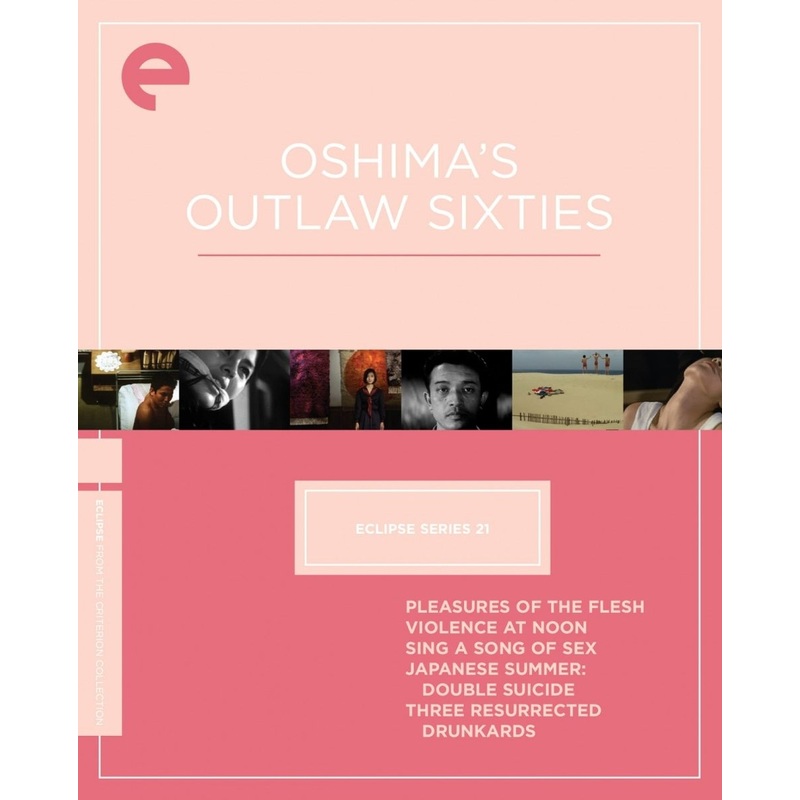
Often called the Godard of the East, Japanese director Nagisa Oshima was one of the most provocative film artists of the twentieth century, and his works challenged and shocked the cinematic world for decades. Following his rise to prominence at Shochiku, Oshima struck out to form his own production company, Sozo-sha, in the early sixties. That move ushered in the prolific period of his career that gave birth to the five films collected here. Unsurprisingly, this studio renegade was fascinated by stories of outsidersserial killers, rabid hedonists, and stowaway misfits are just some of the social castoffs youll meet in these audacious, cerebral entries in the New Wave surge that made Japan a hub of truly daredevil moviemaking.
SHARE
FILMS IN THIS SET
Pleasures of the Flesh
Pleasures of the Flesh 1965
A corrupt businessman blackmails the lovelorn reprobate Atsushi into watching over his suitcase full of embezzled cash while he serves a jail sentence. Rather than wait for the man to retrieve his money, however, Atsushi decides to spend it all in one libidinous rushfully expecting to be tracked down and killed. Oshimas dip into the waters of the popular soft-core pink film genre is a compelling journey into excess.
Violence at Noon
Violence at Noon 1966
Violence at Noon concerns the odd circumstances surrounding a horrific murder and rape spree. In a twist, the film is as much about the two women who protect the violent manhis wife and a former victimas it is about him. Containing more than two thousand cuts and a wealth of inventive widescreen compositions, this coolly fragmented character study is a mesmerizing investigation of criminality and social decay.
Sing a Song of Sex
Sing a Song of Sex 1967
In Oshimas enigmatic tale, four sexually hungry high school students preparing for their university entrance exams meet up with an inebriated teacher singing bawdy drinking songs. This encounter sets them on a less than academic path. Oshimas hypnotic, free-form depiction of generational political apathy features stunning color cinematography.
Japanese Summer: Double Suicide
Japanese Summer: Double Suicide 1967
A sex-obsessed young woman, a suicidal man she meets on the street, a gun-crazy wannabe gangsterthese are just three of the irrational, oddball anarchists trapped in an underground hideaway in Oshimas devilish, absurdist portrait of what he deemed the death drive in Japanese youth culture.
Three Resurrected Drunkards
Three Resurrected Drunkards 1968
A trio of bumbling young men frolic at the beach. While they swim, their clothes are stolen and replaced with new outfits. Donning these, they are mistaken for undocumented Koreans and end up on the run from comically outraged authorities. A cutting commentary on Japans treatment of its Korean immigrants, this is Nagisa Oshima at both his most politically engaged and madcap.
Add Related products to weekly line up


There are no reviews yet.