New
Free Shipping on All Orders Over $100!

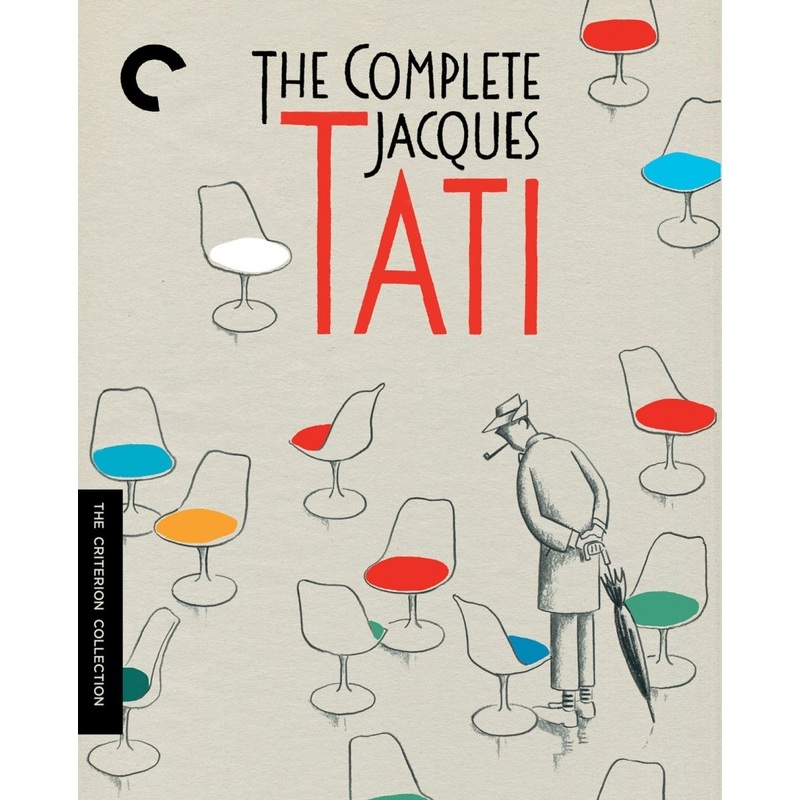
Though he made only a handful of films, director, writer, and actor Jacques Tati ranks among the most beloved of all cinematic geniuses. With a background in music hall and mime performance, Tati steadily built an ever-more-ambitious movie career that ultimately raised sight-gag comedy to the level of high art. In the surrogate character of the sweet and bumbling, eternally umbrella-toting and pipe-smoking Monsieur Hulot, Tati invented a charming symbol of humanity lost in a relentlessly modernizing modern age. This set gathers his six hilarious featuresJour de fte, Monsieur Hulots Holiday, Mon oncle, PlayTime, Trafic,andParadealong with seven delightful Tati-related short films.
Jour de fte
1949
In his enchanting debut feature, Jacques Tati stars as a fussbudget of a postman who is thrown for a loop when a traveling fair comes to his village. Even in this early work, Tati was brilliantly toying with the devices (silent visual gags, minimal yet deftly deployed sound effects) and exploring the theme (the absurdity of our increasing reliance on technology) that would define his cinema.
Monsieur Hulots Holiday
1953
Monsieur Hulot, Jacques Tatis endearing clown, takes a holiday at a seaside resort, where his presence provokes one catastrophe after another. Tatis masterpiece of gentle slapstick is a series of effortlessly well-choreographed sight gags involving dogs, boats, and firecrackers; it was the first entry in the Hulot series and the film that launched its maker to international stardom.
Mon oncle
1958
Slapstick prevails again when Jacques Tatis eccentric, old-fashioned hero, Monsieur Hulot, is set loose in Villa Arpel, the geometric, oppressively ultramodern home of his brother-in-law, and in the antiseptic plastic hose factory where he gets a job. The second Hulot movie and Tatis first color film,Mon oncleis a supremely amusing satire of mechanized living and consumer society that earned the director the Academy Award for best foreign-language film.
PlayTime
1967
Jacques Tatis gloriously choreographed, nearly wordless comedies about confusion in an age of high technology reached their apotheosis withPlayTime.For this monumental achievement, a nearly three-year-long, bank-breaking production, Tati again thrust the lovably old-fashioned Monsieur Hulot, along with a host of other lost souls, into a baffling modern world, this time Paris. With every inch of its superwide frame crammed with hilarity and inventiveness,PlayTimeis a lasting record of a modern era tiptoeing on the edge of oblivion.
Trafic
1971
In Jacques TatisTrafic,the bumbling Monsieur Hulot, kitted out as always with tan raincoat, beaten brown hat, and umbrella, takes to Pariss highways and byways. In this, his final outing, Hulot is employed as an auto companys director of design, and accompanies his new product (a camping car outfitted with absurd gadgetry) to an auto show in Amsterdam. Naturally, the road there is paved with modern-age mishaps. This late-career delight is a masterful demonstration of the comic geniuss expert timing and sidesplitting knack for visual gags, and a bemused last look at technology run amok.
Parade
1974
For his final film, Jacques Tati takes his camera to the circus, where the director himself serves as master of ceremonies. Though it features many spectacles, including clowns, jugglers, acrobats, contortionists, and more,Paradealso focuses on the spectators, making this stripped-down work a testament to the communion between audience and entertainment. Created for Swedish television (with Ingmar Bergmans legendary director of photography Gunnar Fischer serving as one of its cinematographers),Paradeis a touching career send-off that recalls its makers origins as a mime and theater performer.
Add Related products to weekly line up


There are no reviews yet.